
One of the most common questions in astrophotography is which camera to use. The answer depends largely on the type of object being photographed. Nebulae, galaxies, the Sun and the Moon all require different sensor sizes, pixel scales and capture methods.
My own imaging is centred on deep-sky objects, with regular solar and lunar work. Over time, this has led to a three-camera setup where each sensor type is matched to a specific kind of target.
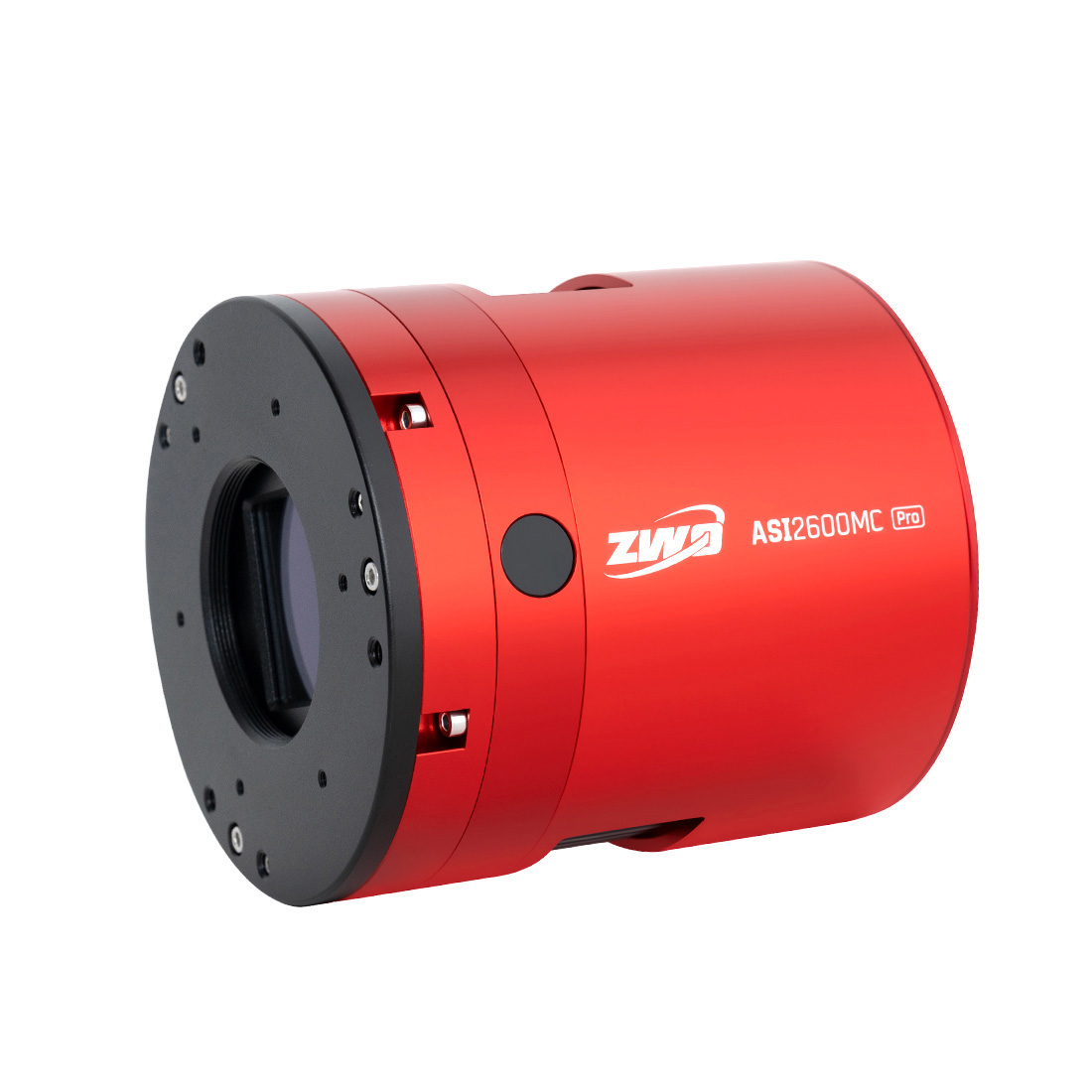
ZWO ASI2600MC Pro: Deep-Sky Imaging Camera
The ASI2600MC Pro uses a back-illuminated APS-C Sony CMOS sensor designed for long-exposure imaging. Its relatively large sensor area allows wide fields of view, which is useful for extended nebulae and large star fields.
The camera includes regulated cooling, which keeps the sensor at a stable temperature during long exposures. This reduces thermal noise and allows consistent calibration with dark frames over multiple sessions.
- APS-C format sensor
- Regulated cooling
- Low read noise CMOS design
- Used for long-exposure deep-sky imaging
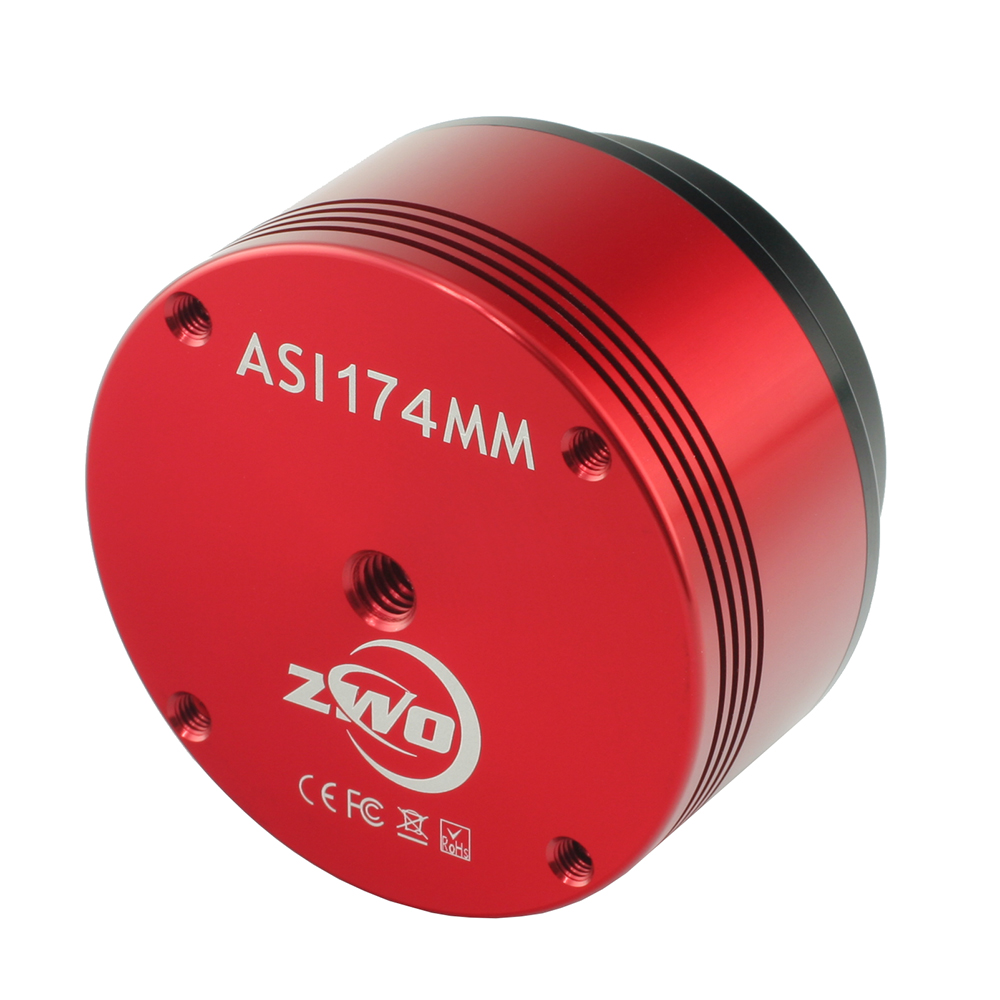
ZWO ASI174MM: Solar and Lunar Camera
The ASI174MM is based on the Sony IMX174 sensor, widely used in solar and lunar imaging. It uses a global shutter, meaning the entire sensor is exposed at once.
The camera can capture thousands of short exposures which are stacked using lucky imaging to improve detail in turbulent atmospheric conditions.
- Global shutter CMOS sensor
- Large pixels for sensitivity
- High frame-rate capability
- Used for solar and high-resolution lunar imaging
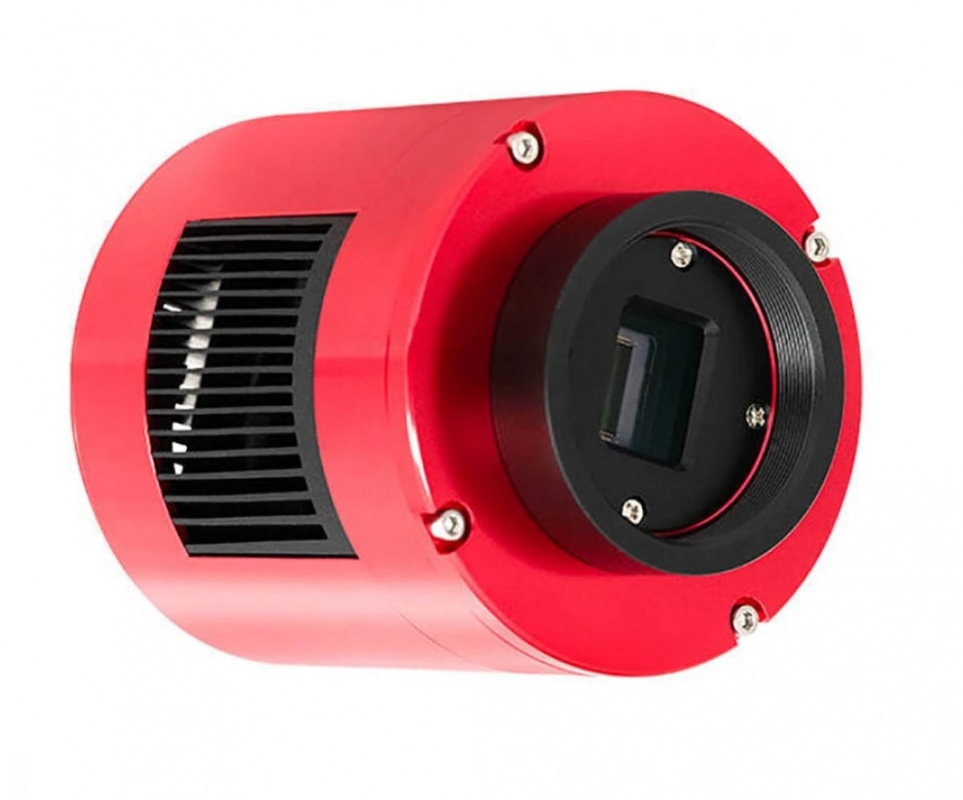
ZWO ASI585MC Pro: Colour Lunar and Secondary Camera
The ASI585MC Pro is a compact colour CMOS camera with a modern back-illuminated sensor. It offers high resolution and low read noise, making it suitable for short-exposure imaging.
It is commonly used for planetary and lunar colour imaging, and for smaller deep-sky objects where a compact sensor is appropriate.
- High-resolution colour CMOS sensor
- Low read noise
- Compact sensor format
- Used for lunar colour and smaller targets
Camera Selection Guide
| Target | Camera |
|---|---|
| Nebulae, galaxies, clusters | ASI2600MC Pro |
| Sun | ASI174MM |
| High-resolution Moon | ASI174MM |
| Lunar colour images | ASI585MC Pro |
Planning Your Camera and Telescope Combination
Sensor size and focal length determine the field of view and image scale of any astrophotography setup. Using a planning tool can help you choose a camera that frames your subject correctly.
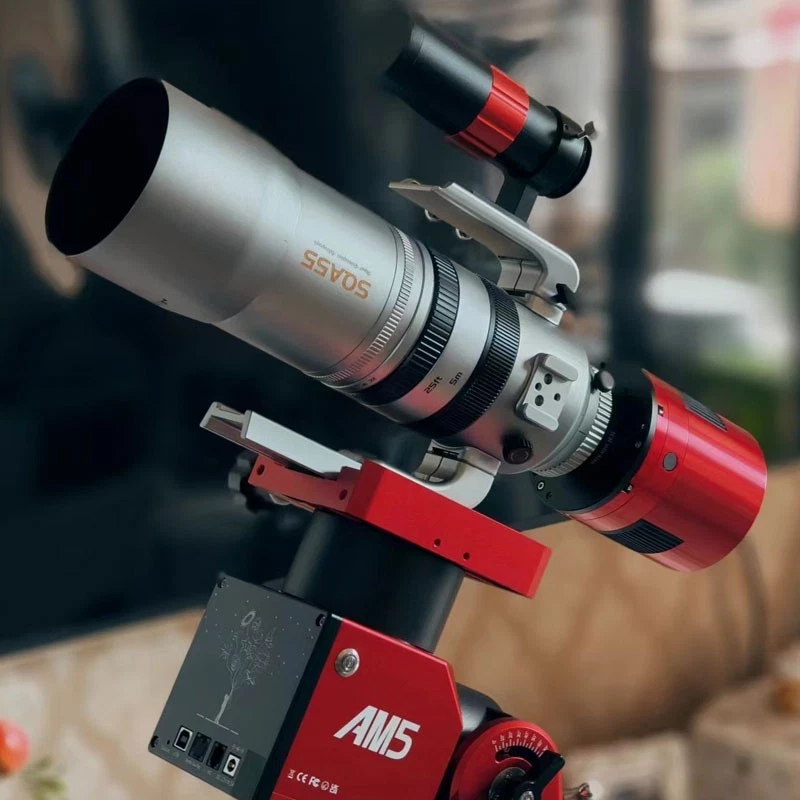 Open Field of View Calculator